DagensPS introduces Twingly – we saw it coming

Swedish news site DagensPS.se has redesigned and introduces social bookmarks and blog links via Twingly. Sound familiar? Thats’ because we told you so, already back in March.

Today Dagens Media writes that the new site is launched, with social bookmarks and Twingly links. We also wrote that DagensPS were testing to let readers start their own blogs, but that feature has not become a reality yet.

Our screen dumps also showed that DagensPS planned to launch a media monitoring feature called PS Spy. That has now gone live and DagensPS’ CEO Bengt Uggla promises it will challenge professional monitoring services “that cost from 15,000 kronor per year”. PS Spy has taken a year to develop and significant investments. Uggla hopes to attract hundreds of thousands of users. The beta version that went live today searches online news sites and blogs in Sweden and the rest of the world. But it only seems to be searching sources during the last 7 days and the number of blogs it searches cannot be very large either. A simple search for “Lindex” only gives us 11 hits from as few as two blogs, Engla’s Showroom and Modefeber, incorrectly named Macfeber. Twingly’s own blog search engine finds 11 hits among Swedish blogs during the last 4 and a half hours alone. And that is a free service. On top of that, with Twingly and other free services like for example Knuff.se, you can subscribe to search results by RSS but I cannot find this feature to be available on PS Spy. We would also have liked the social bookmarking tools to be included in PS Spy, but they are not.

Media Culpa’s verdict: back to the lab again.

Tags: , , , . Ping.

Jaiku is back online and opens up to anyone

Jaiku, the microblogging site, has been down during the last five days due to server issues and a move to the Google data center. Five days is an enternity for a site like Jaiku and it has given us users some serious abstinence. We’ve gotten used to sharing ideas with each other, giving tips and discussing different topics. Without Jaiku the discussion tried to move elsewhere to places like FriendFeed or Twitter, but it wasn’t really the same thing.

When Jaiku now is back online it has opened up to everyone. Previously you had to get an invite, which were limited, by an existing user. Now there are unlimited invites so anyone can register. It will be interesting to see if the discussion among my existing friends will pick up on the same level as last week and if we will see an onrush of new users. If so, will Jaiku be able to handle the increase in traffic?

Footnote: You will find me here on Jaiku.

Tags: , , . Ping.

Banks turn to mass customization

Consumers today are more individualistic than previous generations and that’s one reason why you see teenagers (and we who think we still are) pimp their mobile phones and iPods to get that unique look. Who wants to look like everyone else? While some may argue that people are individualistic in pretty much the same way, facts remain, consumers are spending more and more money on customizing everything from Xbox 360 consoles to sneakers.

With such a demand among consumers, many companies could differentiate themselves against competitors by offering so-called mass customization solutions that enable each customer to tailor a product with a unique design. A recent example are Swedish banks that have started to promote personalized payment cards. Their customers can upload a picture of their choice on the bank’s website (or choose one from an online gallery) to design a unique personal credit card.

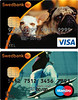
swedbankSwedbank was the first Swedish bank to offer personalized payment cards when they launched Kort på Kort (Photo on Card) a year ago. A little odd though that it initially was limited to grown ups! One would have guessed it to be the other way around, considering the motivations of the different age groups. The cost is 100 kronor for a new card.

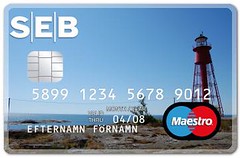
Handelsbanken and SEB seem to be using Gemalto’s CardLikeMe, an external web service which offers some flexibility when it comes to adjusting the photo. Handelsbanken charges 123 kronor (and 85 kronor for renewal card) while SEB charges 95 kronor.

SHB SEB

From what I can see, the fourth large Swedish bank Nordea doesn’t offer personalized payment cards in Sweden, but they do in Finland, also via CardLikeMe. This of course makes Nordea look dull and uncool in comparison to the other big three.

Banks are not known for giving you something for nothing and since most of them buy the service from an outside supplier one shouldn’t expect this service to be free. We also know that consumers often are willing to pay a price premium for customization, so the strategy may be right. But in a more competetive market there might be room for a smaller player to include personalization without cost in order to present a more attractive offer to new customers.

Advantages of mass customization are many. In the case of personalized payment cards, you will increase customer loyalty because the customer is more likely to stay with the bank to be able to use the same card (renewal is often free). You get a higher degree of involvement with the product because the card user will be proud to display the unique card and therefore inclined to use it more often (vs. cash). It is also a source of additional revenue for the bank since the cost for a unique card is higher than for the ‘plain vanilla’ version.

Expect to see more companies offer customization solutions as printing technology and other means of production evolve. What really boring products would you like to pimp?

Tags: , , , , , . Ping.

Aftonbladet has Sweden’s top fashion blog – not!

In his bestselling book The Long Tail, Chris Anderson writes that the U.S. is a country obsessed with watching top lists, a culture which basically is one big popularity contest. In many aspects, Sweden is not much different. Bloggers like to compete and just this morning I had to check my ranking among Europe’s top marketing bloggers (#49 based on traffic) so I’m as guilty as the next guy. In other words, it is not surprising that when a blog or newspaper rank high on a list, they want to share that information with others. But the least you can ask for is that the ‘bragging’ is based on the truth.

I probably shouldn’t have given this article any attention, but it is hard to resist. The Swedish tabloid Aftonbladet today writes that one of their blogs is the most visited Swedish fashion blog.

“Sofi writes the largest Swedish fashion blog.”

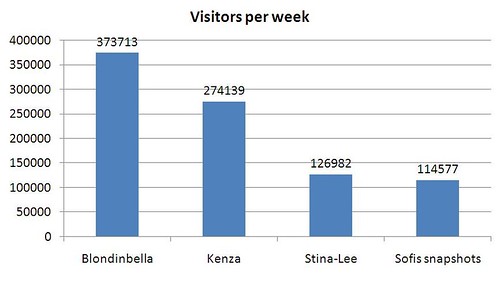
That can only be true if you don’t consider Blondinbella, Kenza and Stina-Lee’s blogs to be fashion blogs. All three, by most people and themselves labelled fashion blogs, have more visitors than Aftonbladet’s Sofi Fahrman.

fashion blogs

Much can be said about the editiorial quality of blogs, but today a couple of teenage girls are more accurate than one of the largest Swedish mainstream media.

Footnote: Numbers in the graph are from Bloggportalen.se and states the number of visits per IP address and hour during the last 7 days.

Tags: , , , , , . Ping.