Facebook now shows trending topics in the news feed

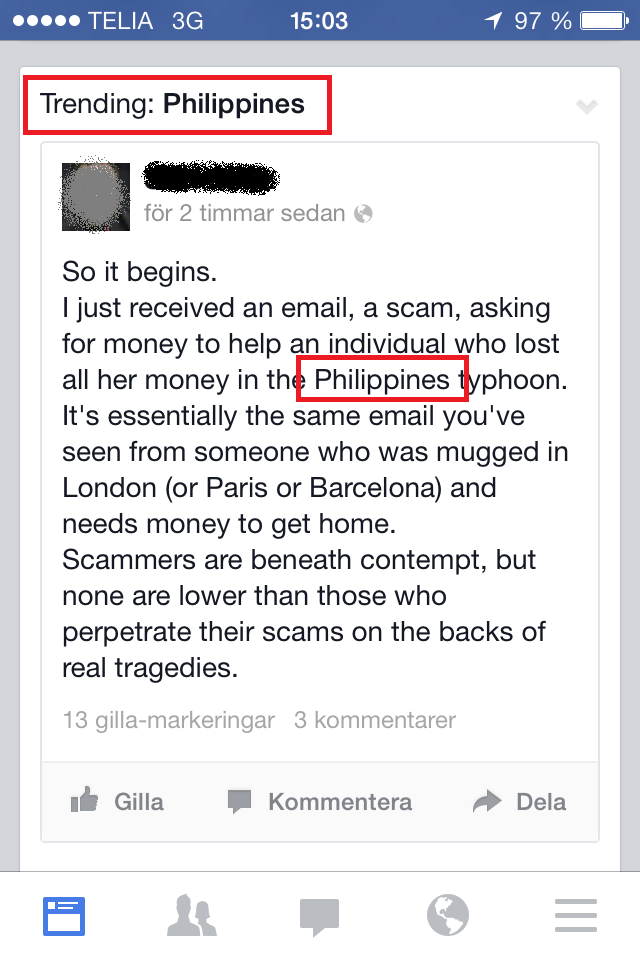
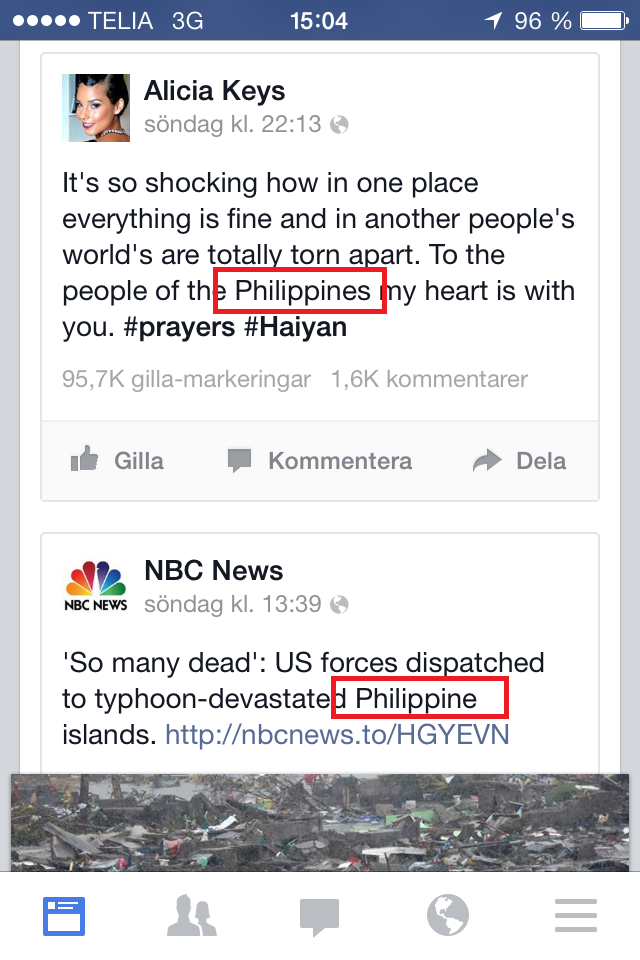
Facebook has been testing the Twitter like feature trending topics for a while and last week there were reports that the trending topics had been moved from the sidebar to the news feed. Yesterday I noticed an example of this for the topic “Philippines”.

One interesting aspect of this is that now Facebook is showing me two posts from people or pages that I don’t follow (the latter two of three seen below).

facebook trending topics

facebook trending topics

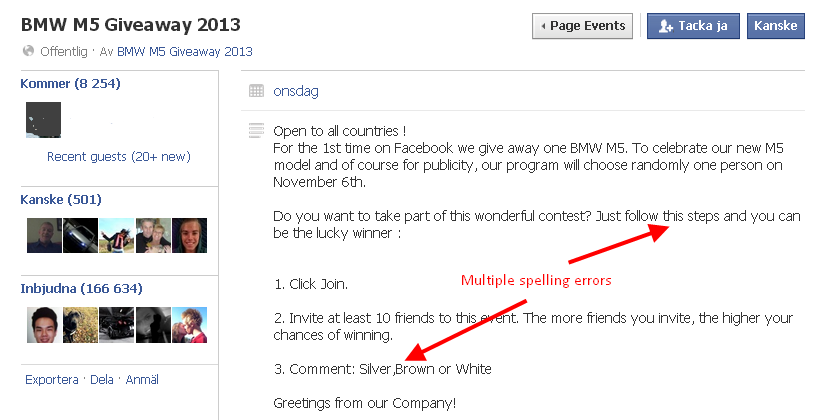
BMW are giving away a brand new BMW M5 on Facebook. Not!

bmw m5 giveaway

Do you think that BMW would give away a brand new car for free on Facebook through a simple “event”? Really? Of course they aren’t. If they would create a giveaway, it would be done professionally in a way that would maximize the return of the investment. Yet, thousands of people think that the simplest of hoaxes is the real deal and gladly accept invitations to a Facebook event, thinking they might actually win a new BMW M5. A new community page is attracting thousands of people to a “BMW M5 Giveaway 2013” (edit: link no longer works) who are encouraged to like the page and invite ten friends. More than 200,000 people have been invited so far. And without any doubt, this is a hoax from start to finish.

So if you care at all whether you are tricked into liking fake pages on social networks, maybe it is time you learn a few basic tricks on how to spot a fake Facebook competition of giveaway. It really doesn’t take a genius.

How to spot a fake giveaway on Facebook

First of all, is it reasonable that a large brand is giving away something really valueable for just a few likes in return? Probably not. The more “upscale” brand, the more quality we can expect in a marketing activity. This event could have been set up by a 10-year old.

Brands use multiple channels to communicate. Is this contest or giveaway communicated on any other place on the web? On the brand webpage or the brand Facebook page? If not, it’s probably fake.

Are you being asked to spam your friends with shares, likes or invites? Big brands try to play by the book. If you are asked to do something that could be considered spam or not following the guidelines of Facebook, it’s a hoax.

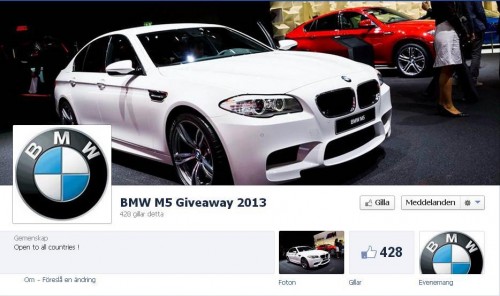
Does the page have credible branding? The BMW giveaway is a community page. A brand would not use a community page to promote a new product. And as you see below, the page doesn’t have a branded vanity URL, which you would expect a big brand to use (click on the images to see larger version).

bmw m5 giveaway facebook

Does the page have credible background information? If not, it’s not only a hoax, it’s a lazy hoax.

Did the page just launch or has it communicated trustworthy information for some time? If it is new and the giveaway is the very first post, you should think again.

bmw m5 giveaway facebook

Does the contest or giveaway have a professional touch? If there are several spelling errors in just a few paragraphs, it’s probably fake.
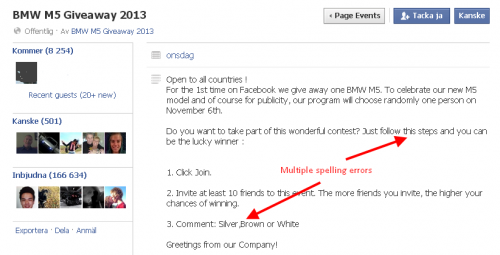
bmw m5 giveaway facebook

Does the information change on the event page? Are  there copies? For a brief second, this giveaway page pointed to a second, similar page called BMW M5 Gift, with the same purpose and it has already attracted hundreds of people who in turn have invited 20,000 others. Once they got the first scam going, this could go on forever.

It’s amazing how easy it is to trick people into liking and sharing pages on social networks. We rarely take a minute to reflect on information that is shared by our friends, and that practice can be easily exploited. So in the future, think before you share.

Oh, and if I win, I would like a white BMW M5…

Update Nov 6: Both BMW pages and events are not gone from Facebook. But there are other similar scams that are still live, like this Audi R8 Giveaway. Also fake, of course.
Ryanair crash lands in Twitter chat

In a recent survey published in Britain’s premier consumer magazine, Which?, budget airline Ryanair was voted last among 100 top brands in quality of customer service. Perhaps the airline is finally starting to realize that it needs to improve its awful reputation in order to remain competitive and make an effort not to “unnecessarily piss people off”.

“Ryanair chief executive Michael O’Leary told shareholders Friday his airline must improve how it treats passengers and handles complaints so that customers don’t feel pushed around by staff and unfairly imposed charges – and potentially take business to other airlines offering more than Ryanair’s budget model.”

But if Ryanair thought a Q&A session on Twitter with CEO Michael O’Leary would do any good, they failed miserably. The thing with inviting customers to a public debate is that you will not always get the responses you wish. We’ve seen a number of cases where critics have hijacked hashtags on Twitter because it’s a great opportunity to get exposure for your complaints. In a case with a brand that so many people hate, you would obviously expect that critics would take advantage of the situation. People who would otherwise have been silent, now feel there’s an excuse to voice their opinions.

Some examples under the hashtag #GrillMOL on Monday were:

“Were you born an arsehole or has it progressed throughout your life?”

“Is it company policy for your staff to be rude and unhelpful as possible?”

“Due to fly to Riga on Saturday but can’t go as my mum in law is losing her cancer battle. 388 quid to re-book seems unfair”

“Why no response for a refund request (sent reg. post) in over a month from seriously ill girl with special needs? @Ryanair #scum”

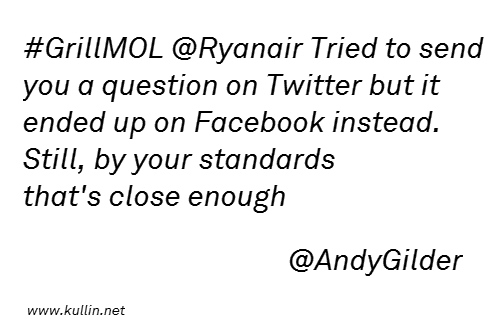
Here’s another great tweet from @AndyGilder, mocking Ryanair:

Twitter chat Ryainair Michael O'Leary

O’Leary’s history of nasty macho responses to everyone from customers to journalists and politicians has earned him the title “aviation’s most hated man”. The Twitter chat was no exception as he started out commenting female Twitter users’ avatars: “Nice pic. Phwoaaarr! MOL”, to which others responded:

@Ryanair how is it appropriate for an airline CEO to be a sexist pig?”, and: “People who fly Ryanair: do you also think this is an acceptable thing to tweet at a woman?”

A brand in trouble could make use of social media if their intent is genuine, if they are really there to listen and be prepared to change. If you open up a dialogue with critics just to mock them, prepare for disaster.

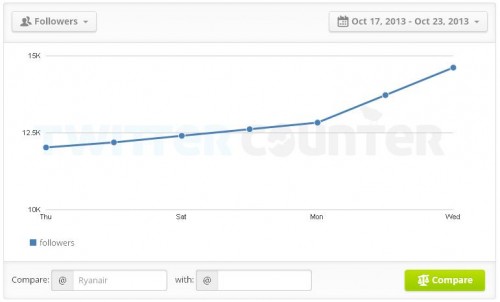
However, as is often the case, even bad publicity will get you attention and the @Ryanair Twitter account has gained nearly 2,000 new followers in the next two days. Perhaps this could be the start of something new, after all. But until the company changes its approach to customer service and to its own employees, I will not fly with Ryanair.

ryanair twitter

The Barilla crisis: the brilliant competitor response that never was

Italian pasta brand Barilla found itself in the middle of a crisis yesterday, caused by a quote from its chairman Guido Barilla. In a radio interview, Mr Barilla said that the company would not include gay people in its advertising. After threats that customers would start a boycott against the brand, the company issued an official apology.

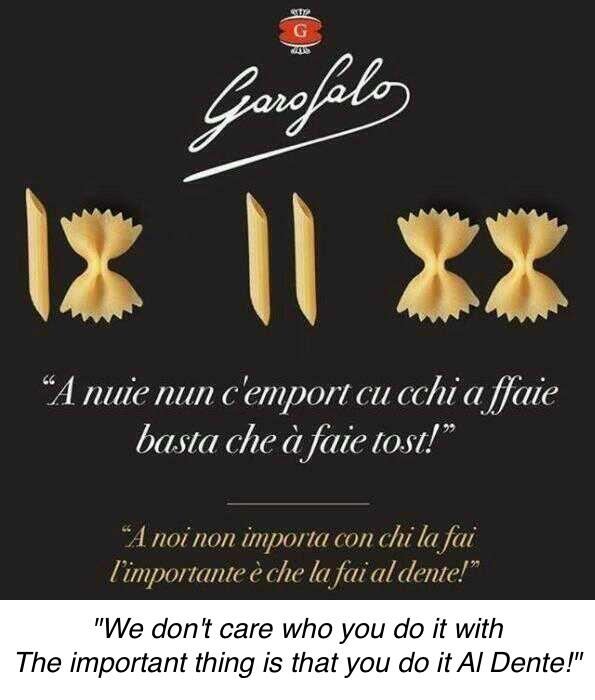
As often happens in cases like these, customers tend to make fun of the brand, posting things such as fake ads on social networks and generally trying to humiliate the brand. These online comments often go viral. This time, one popular item is the following comment from one of Barilla’s competitors, Pasta Garofalo.

garofolo barilla spoof

But while making fun of a competitor in a crisis may give you a few laughs and some instant publicity, it’s a risky business. Creating an atmosphere where it is ok to stab competitors in the back may in the long run result in damage to both brands. And the good people at Garofalo know this, that’s why they never posted the image above. It’s a spoof and have been created by someone else, pretending it’s an official comment from the brand.

The company quickly posted a comment on its Facebook page to set things straight. The comments says that the ad is not theirs, they have not been involved and they do not approve of it. I think it was wise of them to act and to distance themselves from the ad. And as always, if in doubt if something is fake or not, try check the source.

Ryanair threatens to sue Swedish newspaper

The Swedish local daily Sörmlands Nyheter (sn.se) today published an article with the headline “Ryanair pilots forced to fly free”. In the article, pilots describe how they get paid only for scheduled hours and not a minute more. If an aircraft is delayed, it means that pilots fly for free once their scheduled time has run out.

“This is extremely stressful, especially in the evenings. Everyone wants to come home and if you are going to fly the next day you have to get some rest between flights. Landing too late means you don’t get to fly the next day and then we have flown without pay ang get no income day after. This forces you to make stupid decisions and is a major safety hazard. I doubt that passengers know that the person flying them sometimes do so without pay,” says one pilot who wants to remain anonymous in fear of getting sacked by the airline.

The article describes the pilots’ dissatisfaction with current working conditions. In a follow up article, Ryanair’s Head of Communications Robin Kiely denied all claims from the pilots, claiming they were “rubbish”. In an email response to the paper, he also threatened to sue the paper if the statements from the pilots were published.

“If you publish any of these claims, we will initiate legal action against your newspaper,” Kiely wrote.

That seems like normal procedure at the airline, which just last week threatened to take legal action against British Channel 4, after a documentary about pilots’ concern over passenger safety. Apparently the PR strategy from Ryanair is to stop pilots from publishing any views on social networks (I blogged about it here in Swedish) and threaten to sue any media outlets that publish anonymous comments from pilots. That doesn’t sound like an airline that I would ever fly with.

Subaru Emirates’ local social media blunder has impact on Subaru in the USA

It is not uncommon that brands suffer serious backlashes on social networks for controversial or offensive campaigns, tweets or Facebook posts. Sometimes the damage to the brand is minimal, but a local issue can quickly damage a global brand. Here’s one fresh example from Subaru in Dubai.

Last Thursday, four people were killed in a car crash on the Shaikh Zayed Road in Dubai, among them a nine-month-old baby. The driver reportedly stopped in the middle of the road due to a flat tire instead of pulling over to a safer place on the side of the road. Another vehicle smashed into the car killing four people.

Real Time Marketing gone bad

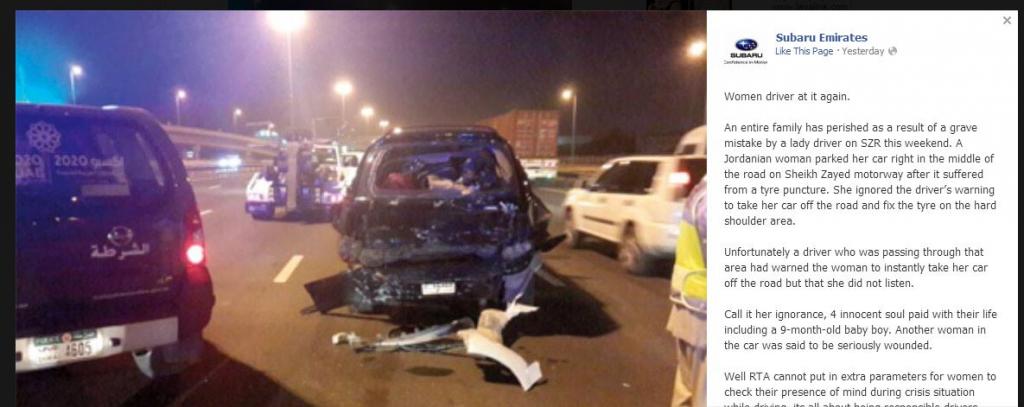
In an attempt to use the incident in its marketing, Subaru Emirates in Abu Dhabi posted a status update on its Facebook page with the following message.

“Women driver at it again.

An entire family has perished as a result of a grave mistake by a lady driver on SZR this weekend. A Jordanian woman parked her car right in the middle of the road on Sheikh Zayed motorway after it suffered from a tyre puncture. She ignored the driver’s warning to take her car off the road and fix the tyre on the hard shoulder area.

Unfortunately a driver who was passing through that area had warned the woman to instantly take her car off the road but that she did not listen.
Call it her ignorance, 4 innocent soul paid with their life including a 9-month-old baby boy. Another woman in the car was said to be seriously wounded.

Well RTA cannot put in extra parameters for women to check their presence of mind during crisis situation while driving, its all about being responsible drivers.”

subaru emirates social media blunder

The post blaming the driver’s gender and nationality for the accident caused an uproar among local Facebook users and the post was taken down the day after. Subaru Emirates also posted a somewhat backhanded apology on Facebook:

“Dear Readers,

A recent post on our Facebook Page offended the sentiments of a number of people.

Our sincere apology goes out to everyone for this.

We respect your sentiments and have taken down the post with immediate effect.

At Subaru, SAFETY IS OUR TOPMOST PRIORITY AND CONCERN.

The news posted yesterday was intended as a general awareness message. Sometimes with the best of intentions a final communication may come out wrong. This was one such instance. We just want to bring to everyone’s notice to please be more cautious while driving.

Our sincere apologies once again.”

Local crisis becomes international crisis

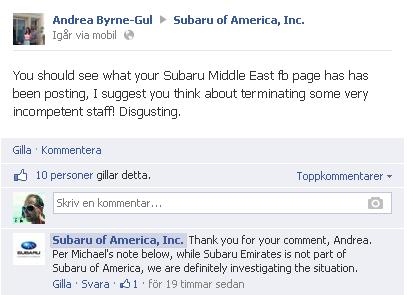
But the social media blunder dit not only hurt the brand locally, comments soon flooded the US Subaru brand page on Facebook were several people reposted the offensive post, forcing Subaru of America to respond and take action.

subaru america facebook

This case shows how important it is to respond to social media crises quickly and in a manner that doesn’t initiate further criticism. If you don’t, there is a real risk that the issue will spread more widely. It also goes to show that the concept of using current news stories for brand marketing easily can backfire.