Foursquare Super Duper Swarm Badge

I am currently attending SIME in Stockholm and the first presentation this morning was by Josh Williams, CEO and co-founder of Gowalla. I hope to write down some thoughts on that later.

But that reminded me of my visit to Vienna this weekend. During the World Blogging Forum 2010, more than 500 people checked in on Foursquare at the same time. This earned all of us the much desired Super Duper Swarm Badge. So at least among the bloggers at the event in Vienna, Foursquare was the clear leder in the location-based services race.

The next level is the Epic Swarm Badge when 1,000 people check in to a venue on Foursquare. That’s a tad bit harder to achieve.

Report from the World Blogging Forum 2010

I had the opportunity to attend the World Blogging Forum 2010 in Vienna last weekend and met with bloggers from countries such as Finland, Italy, Republic of Macedonia, Switzerland and Turkey, to name a few. One of the key takeaways from the day for me was that blogging varies greatly across Europe.

For example, Werner Reiter, press spokesman for A1 Telekom Austria (the main sponsor of the event), estimated in the initial presentation that there are among 5,000 active bloggers in Austria. Even though this is an estimate and that we do not know how “active bloggers” is defined, it is still a huge difference compared to the rougly 500,000 Swedes that are blogging. The size of the population of the two countries are about the same.

How to monetize blogging
Another topic that was briefly discussed during the sessions was how bloggers can monetize their blogs and it became apparent that in contrast to many other countries, the Swedish blogosphere is more commercialized and a far stronger alternative for advertising than in most other countries. This is in part due to the large audiences the blogs attract and that there are services that lets advertisers easily put ads on several blogs. Very few other countries can show the huge traffic that the top Swedish blogs have, with at least five blogs with more than 1 million monthly visits, according to Bloggportalen.se. It seems, not even a large country (with a wide spread language) like France can compete. For example, Eric Dupin who was one of the guests, run one of the top blogs in France. The blog, called Presse-citron, has about one million monthly visits (which of course is a great achievement). So in terms of blog traffic, Sweden is definitely punching above its weight.

Global Voices protecting threatened bloggers
During the second session, the forum touched upon some more serious topics. Global Voices is a community of more than 300 bloggers who promote voices that otherwise are censored or have trouble being heard. Onnik Krikorian, the Caucasus Regional Director of Global Voices, described how the situation was in his region, which is vastly different from how we in Sweden look at blogs as tools. Onnik cannot call or travel to Azerbaijan because he has an Armenian name, although he has a UK passport. But he can use social media tools such as Skype to reach the neighbouring country.

Social media fills an important role in South Caucasus, in countries like Armenia, Azerbaijan and Georgia.

  • Armenia: Politically polarized blogosphere, USAID focus on alternative resources
  • Azerbaijan: Foreign radio stations taken off air in jan 2009. Reported huge increase in online activity, especially blogs
  • Georgia: August 2008 war with Russia. Still most activity on forums, now focus on new and social media. Internet fastest and cheapest in the region

His presentation can be found below.

Global Voices also has a special site that monitors bloggers that are being harassed – Global Voices Advocacy. Among those bloggers are Croatian blogger Marko Rakar (pollitika.com). He told us how he and others worked to expose voter frauds in Croatia. For example, at one point (don’t know the exact year of this election), Croatia had 600.000 more votes than there were voters. Marko helped expose this voter fraud which actually made Croatia change its constitution. See his profile at Threatened Voices.

Wbf2010

In the picture: Onnik Krikorian, Werner Reiter and Marko Rakar (standing).

There was also a great presentation by Matthias Luefkens from the World Economic Forum about Twitter Diplomacy, but since he is attending SIME in Stockholm this week, I won’t spoil it for you by revealing too much (although you can find a video of the presentation in one of the links above).

All in all, I’m greatful to have been invited to the forum and it was great to discuss blogging with people from so many different countries.

Update: I got some facts wrong and the text has now been updated.

The blogosphere is alive and kicking

Although my blog survey BlogSweden 5 indicated that bloggers are spending a little less time now on their blogs than last year, other statistics show that more people in Sweden write and read blogs. This weekend I attended the World Blogging Forum in Vienna and met bloggers from a number of different countries. One conclusion from all the discussions with other bloggers is that the Swedish blogosphere is quite different, with its heavy dominance by younger women and fashion blogs.

I wrote a guest post about the Swedish blogosphere on the World Blogging Forum site.

Invites to Facebook mail probably fake

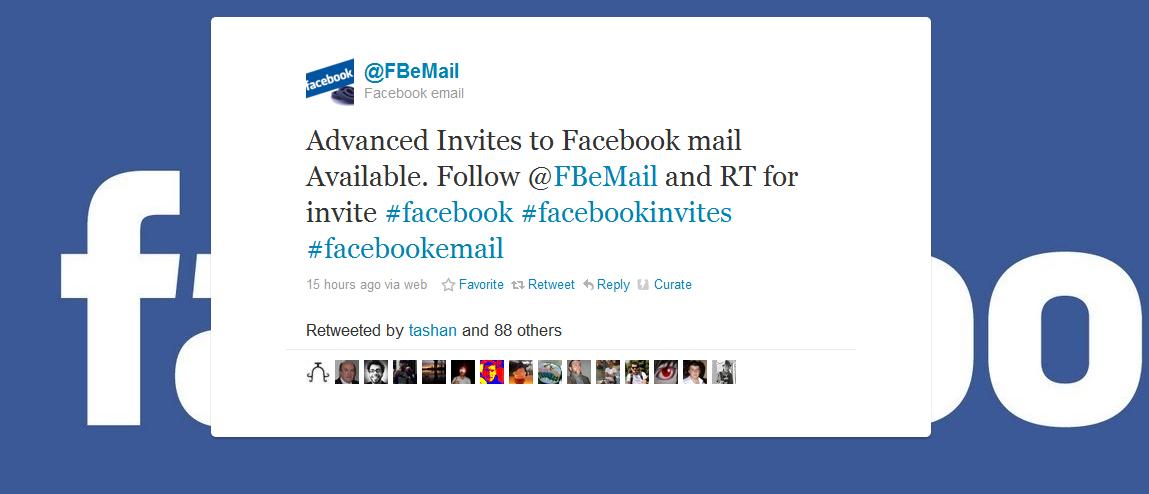
Twitter is currently buzzing about invites to Facebook Messages. Many people want to be among the first to try out the new mail that was announced by Facebook yesterday so when they see that you can get one of 100,000 invites by just retweeting a message, of course many take the chance.

The problem is that this is most probably completely fake. Why? Well, first of all, we’ve seen it before. When people were desperate to get an invite to Google Wave, they got tricked into retweeting the message“RT @waveinvite Just requested my Google Wave Invite! Get yours at http://waveinvite.co.cc” which was fake. The link went to a site that contained material that was NSFW.

Second, how are they going to send an invite to someone who just retweeted a message, when they are not following you back? I don’t get that. And third, there are two different accounts pulling the same almost identical stunt, @fb_com and @FBeMail. Do you really think Facebook would communicate this way, using accounts that were just created? I don’t. So once again, think before you retweet something. It may not be true.

“100,000+ Advanced Invites to Facebook mail Available. Follow @fb_com and ReTweet for invite #facebook #facebookinvites #facebookemail

Invite Facebook mail

“Advanced Invites to Facebook mail Available. Follow @FBeMail and RT for invite #facebook #facebookinvites #facebookemail

Facebook mail invites

You can apply for an invite on the Messages page inside Facebook. And if you want to see what it looks like when you get the invititation, Jeremiah Owyang has a screen shot on Flickr.

Spotify suspended on Twitter

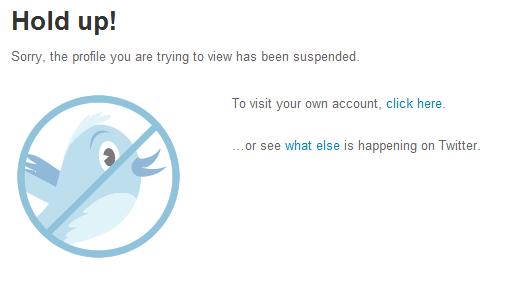
This morning I was alerted by my Twitter friends that the official Spotify account on Twitter had been suspended. This is the first time I have seen that a Verified Account has been suspended. I haven’t found any explanation on Twitter to why this has happened but will follow the developement closely and update as soon as I hear anything.

With more than 65,000 followers on Twitter, Spotify is the Swedish company with most followers.

Social media for property developers

Now and then I’m asked if there is a line of business that shouldn’t use social media, or if there is a type of business that doesn’t belong on Facebook. While I’m sure that you can find reasons for not engaging in these channels, I always fail to come up with an example of an industry that shouldn’t participate in social media. I would argue that most businesses can reach at least some of their stakeholders, be it customers, employees, rectruiting candidates or partners, via social networks, blogs or other social tools. Why do I bring this up? Well, because I find it so interesting when I stumble upon a social media case story from an industry that isn’t your usual suspect of IT or consumer products.

Social media for property developers in Turkey
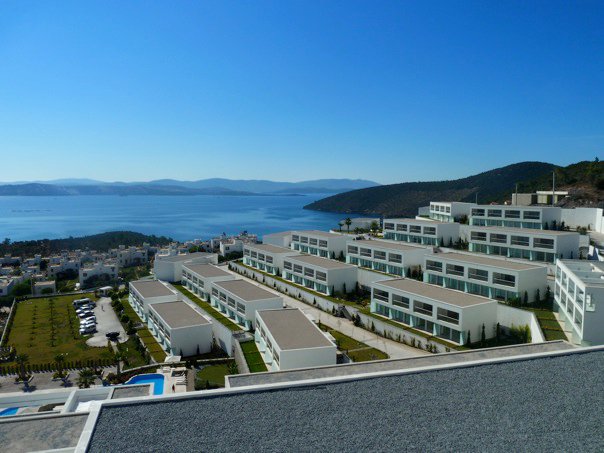
The property development company Signature International is building Horizon Sky, a community of apartments, penthouses and villas in the bay of Gulluk, near Bodrum, Turkey. In a project of this size, customers and potential customers of course have a great need for information and a lot of questions will arise along the way. In this case, a Facebook group that initially was started by one of the buyers has become as a key source for information and discussions.

“Set up by an entrepreneurial buyer back in 2008, the FaceBook Group has now become a surprisingly important part of our business.  With almost 340 members, each at a different stage in the Horizon Sky buying process, there’s always an ‘expert’ online to handle queries and as a developer we’re delighted to observe the debate,” says Daniel Dias at Signature International.

The group includes almost 500 photos, several videos and close to 50 different discussion topics.

“The most fascinating lesson that we have learned is what really concerns our clients.  Whilst we assumed that delays in the construction timeline or minor contractual changes would cause the greatest debate, we were wrong.  Most postings relate to communication.  Providing everyone is in the loop, regularly informed and aware of latest on-site progress, the Group tends to be happy.  So we have to make this a priority for Signature International,” Dias continues.

While this is by no means rocket science, it’s a good example of how almost any business can use simple tools like Facebook groups to engage with customers, and to connect customers to each other.