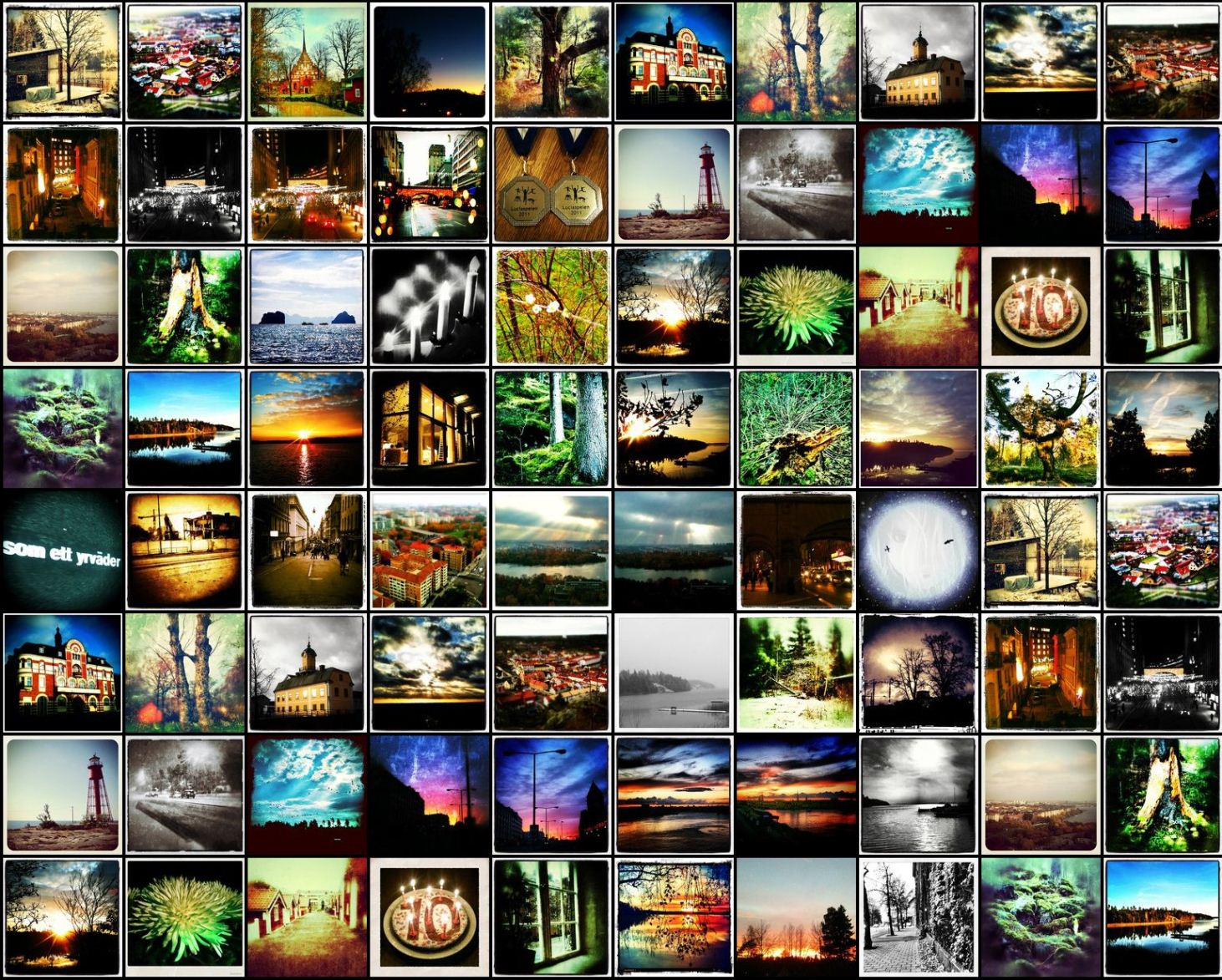
Instagram may reach 1 billion photos in April

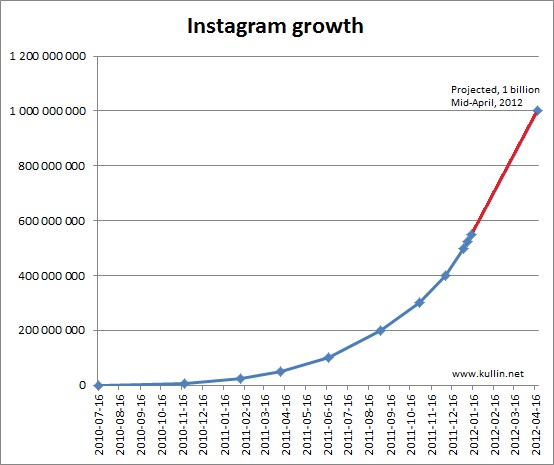
Instagram, one of my favourite apps, is growing like crazy. In September last year, I noted that users had uploaded 200 million photos, which meant that the growth rate in August was about 50 million photos per month. Now, it seems that users are adding the same number in just 11 days.

According to my calculations, Instagram passed 500 million photos on Jan 2, 2012 and 550 million on Jan 13. That means that 4.5 million photos are uploaded each day to Instagram and at that speed 1 billion photos will be reached about April 20, or possibly sooner if the service continues to add new users.

If you want to check the dates of the different milestone photos used in the graph above, follow the links below:

07-16-2010: 2

11-19.2010: 5000001

02-09-2011: 25000002

04-09-2011: 50000000

19-06-2011: 100000000

02-09-2011: 200000000

29-10-2011: 300000001

07-12-2011: 400000000

02-01-2012: 500000000

08-01-2012: 525000000

13-01-2012: 550000000

Some even numbers are not available, I suspect because they are private (or have been deleted). The ID’s of the milestones have been recovered by using Statigram and Ink360.com. There’s no guarantee that the ID numbers from theses sites are an accurate reflection of the total volume, but previously this way of counting has proven to be quite accurate.

Footnote: I’m @kullin on Instagram.

Your Facebook page is a litmus test of your brand’s health

Since I started blogging in early 2004, I’ve heard over and over again how brands have lost control of their reputation. Power has shifted away from brands and towards customers, employees and other individuals. With new publishing platforms, ordinary citizens have gotten the possibility to voice their opinions and influence businesses and organizations trough social media. Nowhere is this more evident today than on brand pages on Facebook.

litmus test

Due to the sheer volume of individuals that are present on Facebook, any people that have a bone to pick with a brand will almost automatically gravitate towards the Facebook page of that company simply because of the amount of exposure that comment can get. Sure, you can still influence by writing blog posts and using other channels, but writing on the wall on a Facebook page is more direct, you feel like you are talking directly to the brand and its customers, right on its turf.

If you visit the Facebook page of a brand and it is nothing but a steady stream of negative comments, it will probably influence how you view this brand (see also my post about Chiquita on Facebook). Take a look at General Motors for example. I’ve written two blog posts about how Saab fans have turned the GM page into a big mess, while GM have done nothing. But GM have other problems on Facebook. People are complaining about everything from problems with cars to bad service. They are complaining about working conditions and the fact that GM killed off the Pontiac brand.

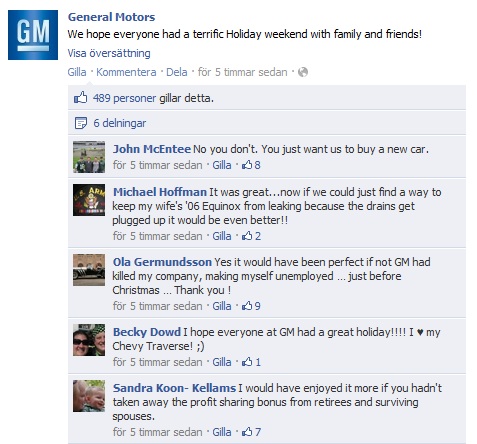
When GM wishes everyone a nice holiday, “fans” are responding with all sorts of negative comments, mostly about the decision by GM to cut Christmas bonuses for retirees. This post has 106 comments, at least half are probably negative.

General Motors comment bonus

It has now been more than two weeks since the first outburst of criticism from angry Saab fans and finally we are starting to see some activity from GM. There aren’t as many Saab photos posted as it was a week or two ago, but they keep coming. But maybe this incident pushed GM into taking a bit more care of their page than they previously did. Representatives from GM Customer Service have now responded to a few posts by fans and even the admin of the GM page has responded a few times.

A brand should not let critics run their Facebook page. If you are the subject of a smear campaign, like GM with the Saab story, you can’t comment on everything but you need to find a balance where you let critics comment but you don’t surrender the entire conversation to your opponents. As a brand, listen to the opinion and try actively to solve the issue.

Facebook has become an important driver of corporate reputation. If you don’t think that your Facebook page reflects reality, then you should do something about it. If you don’t, we are left to believe that this is how the world views your brand.

How to create a Twitter background image from your Instagram photos

Yesterday I posted my 200th photo on the photo sharing app Instagram. I have become slightly addicted to Instagram and enjoy sharing photos that I adjust with different photo filters, as well as looking at the amazing images published by other users. Now, there’s an easy way to create a background image for your Twitter account, either from your own Instagram photos, or from other people’s photos. Just go to InstaBG.com and authorize the app. Then you can create an image from your own feed, from another user’s ID, a category or a tag.

You can choose size of the photos, order them by date, popularity or random order, and it is even possible to let the app auto-update the image daily with the latest Instagram photos of your choice. From what I can see, InstaBG takes the 48 latest photos from the stream you have chosen.

I added my photos to my Twitter account. The only problem I had was that it was not possible to upload a background image that was as large as 2.006 pixels wide so I saved it to my computer, then scaled it down to about 1.500 pixels wide and uploaded it manually, which was ok. If you also experience this problem I assume that the auto-update feature will not work properly.

Update: It seems that some are having trouble uploading the image via InstaBG (probably the image is too wide). But it is quite easy to save it to your computer, scale it down to about 1.500 pixels and then upload it yourself via Twitter.com.

twitter background instagram photos

London police name and shame rioters on Flickr

In August this year, the Manchester police in the UK tweeted the names and birth dates of people who have been convicted in relation to the UK riots. Yesterday, the Metropolitan Police Service in London published photos on its official Flickr page of 64 people who had been convicted for offences during the riots. Details of the convicted include name, birth date, street/location, offence and sentence. Among them for example, an 18-year old that was sentenced to five years and ten months for violent disorder, robbery and burglary.

The photos on Flickr are published with a Creative Commons license so that anyone is allowed to share and use the images.

images of convicted uk rioters

I find this practice to be an appalling abuse of power and I hope it doesn’t spread to other parts of law enforcement. Police in Stockholm have announced they will increase its focus on social media in 2012, but I strongly believe they are more sensible than the police in the UK.

Hat tip to Neville Hobson for the link to this story.

Facebook brand pages under attack from activists – Chiquita next in line

The last few days have proven once again that open social media spaces such as Facebook pages and corporate blogs are becoming targets for disgruntled consumers or activists all over the globe. My recent posts covered how fans of Saab fill the Facebook wall of GM with negative comments and pictures. A week earlier, US appliance store Lowe’s Facebook page got more than 9,000 comments from people aggressively debating whether the company was right to pull its ads from the reality show All American Muslim.

Nescafé and #nescafail
The latest example comes from Hungary, where the local Facebook page of Nescafé came under siege. The company arranged a competition which asked people to send an idea for a project. Janos Szolnoki asked for some help from the community on the popular website 9gag in order to win the contest and win $5000, so he could help his little brother who is disabled. He gained an incredible 47,000 likes to his entry, but Nescafé still didn’t pick his entry for the final round (actually in line with the contest rules, but still…). This angered the online community that started tweeting with the hashtags #nescafail and #scumbagcafe. A Facebook page called Occupy Unfair Nescafé was launched and the local Hungarian Nescafé Facebook page was swamped with comments. Nescafé eventually responded, and did so quite well in my view.
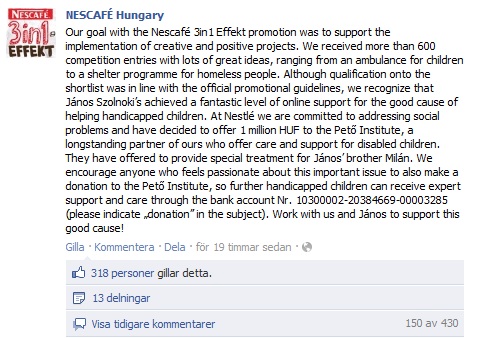
NESCAFE Hungary Facebook


More about this story here and here.

Chiquita delete negative comments
Yet another Facebook page that is under fire is the page of Chiquita. The company has announced it is boycotting oil from Canada’s oilsands, which has led to a counter-attack from Canadians arguing their oil is “ethical” in comparison to the oil from countries like Iran and Saudia Arabia. A campaign called Chiquita Conflict is using websites, Twitter and more to fight against the decision by the banana brand. Two Ministers of the Canadian Parliament have even tweeted about the reverse boycott.

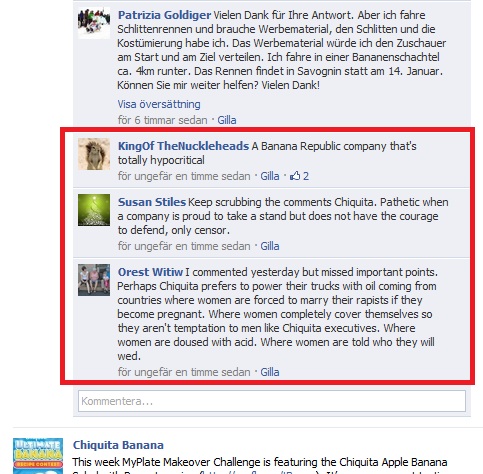
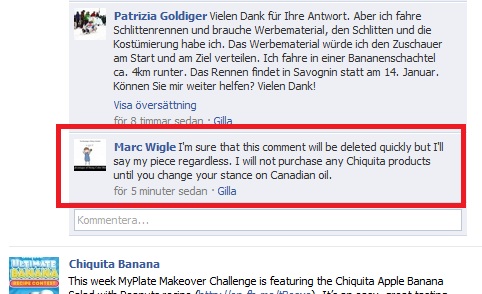
A part of the campaign is to comment on the Chiquita Facebook page, which does not let anyone post on the wall, you can only comment on updates by the brand itself. Comments criticizing the company are being deleted after only a few minutes. Here are some exampels I managed to catch.

Negative comments to this post:
Chiquita

These comments were soon deleted:

Chiquita

Then a new negative comment was posted, but then later deleted:
Chiquita

Chiquita may not convince Canadians to buy more bananas, but by being extremely clear what they expect from visitors to the page, they at least have guidelines to lean against when they delete comments. Chiquita maintain tight control over the Facebook page. I’m not saying it is the perfect solution – what they gain in control, they lose in interactivity. But at least their page doesn’t look like GM’s.

From the Chiquita Banana Page Rules:

“We love it when our fans leave comments, photos, videos and links about Chiquita brands and products. Administrators will review page content to ensure that there are no offensive, inappropriate, or unrelated items and will moderate or remove content that is not in compliance with our terms and conditions.

Facebook pages have become the new battleground for brand activism and brands will face more challenges as more consumers are realizing the power a few thousand comments can have on Facebook. Brands must pay attention and make sure they have their house (and guidelines) in order before disaster strikes. There’s no need to panic if you are well prepared, even if you become the subject of a social media crisis.

Hat tip to Markus Welin about Nescafé: http://twitter.com/#!/markuswelin

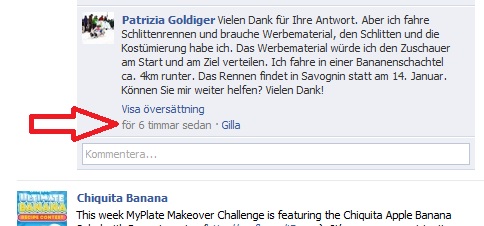
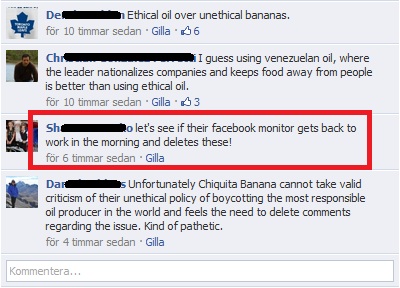
Update: One problem with monitoring negative comments is that the Facebook page administrator sleeps at night, but (some) activists are awake. And they take advantage of that fact. These comments have been up on the Chiquita page for 6-10 hours:
Chiquita Banana

GM silent as Saab crisis on Facebook escalates

As I wrote yesterday, angry fans of the Swedish car brand Saab are taking out their frustration of the Saab bankruptcy on former owners GM and their Facebook page. GM has not written anything on their page since December 16 and the stream of negative comments and nasty images have not decreased. If the strategy from GM is to sit and watch while this blows over, they are running the risk of having their brand severely damaged in the process. The crisis shows no signs of having reached a pinnacle yet.

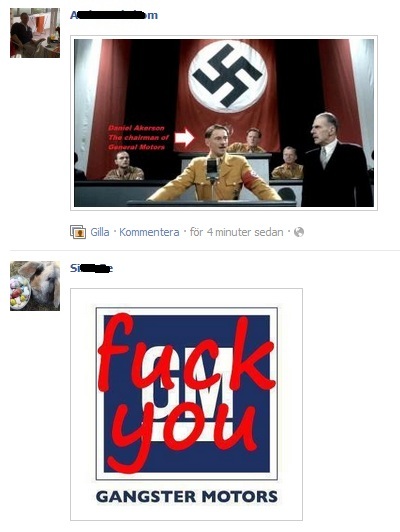
Images posted on the wall are getting worse and worse. Now, there is even an image portraying GM Chairman Daniel Akerson as Hitler.

GM Saab Facebook

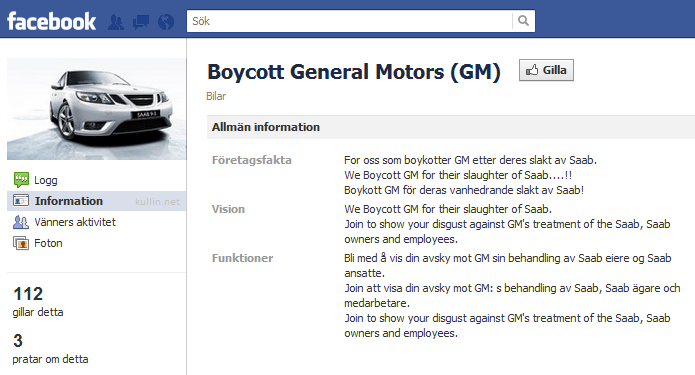
A “Boycott General Motors” Facebook group has also been launched, currently attracting more than 100 people.

Boycott General Motors Facebook Group

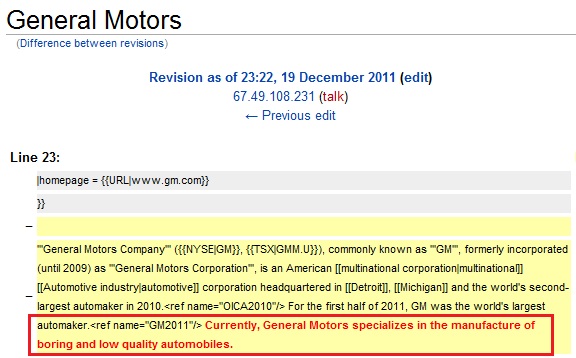
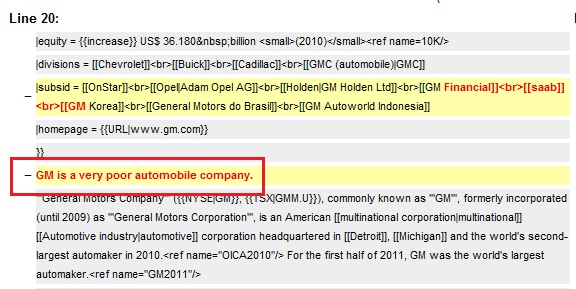
Even the General Motors page on Wikipedia is under attack.
General Motors Wikipedia

General Motors Wikipedia

In other words, the inactivity from GM may eventually hurt them more than if they took action. How long can GM tolerate this outrage on their Facebook page? One day, two days, a week? GM aren’t communicating almost anything about the Saab bankruptcy. One press statement was issued yesterday about the warranty programs for US Saab owners but other than that, GM are silent. So what should GM do?

The first thing they should have done a long time a go, was to have issued community guidelines or comments policy for the Facebook page. Without a policy in place, GM can’t remove anything from the page without running the risk of being accused of censorship.

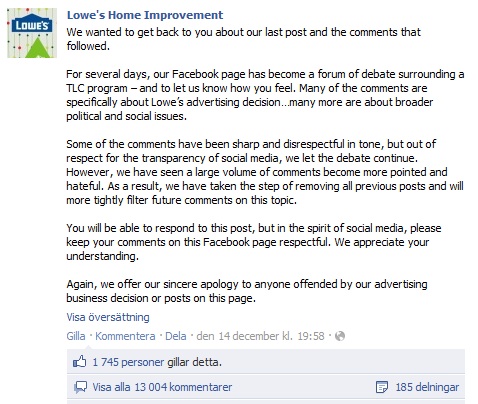
Another thing GM might want to consider is actively communicating their view of the discussion, like Lowe’s Home Improvement did, after having the same kind of kerfuffle after pulling ads from the All American Muslim reality show.

Lowes Home Improvement on Facebook

We will continue to watch this crisis as it unfolds.