The Swedish alphabet just got longer

I read in Dagens Nyheter that the Swedish alphabet just got longer. This certainly does not happen every day. It now has 29 letters instead of 28, since “W” is now considered a letter of its own, as in most countries, and not just a variation of “V”. The reason behind the change is that the 13th edition of SAOL, the Swedish Academy’s dictionary of the Swedish language, has been published and a large number of words beginning with “w” has been added, the most important of course is “webb” (web).

w00t!

Now the shoe is on the other foot

Freelance journalist Gunilla Kinn about bloggers as media watchdogs.

Journalists think there’s no use in defending themselves since “you can never win your case against a blogger”.

(Journalisterna tycker också att det inte är någon idé att gå i svaromål, eftersom “man ändå aldrig kan få rätt mot en bloggare”.)

It used to be the other way around, no?

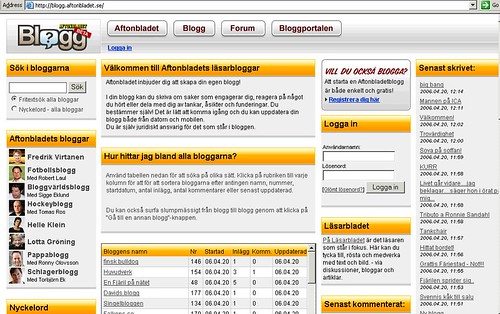
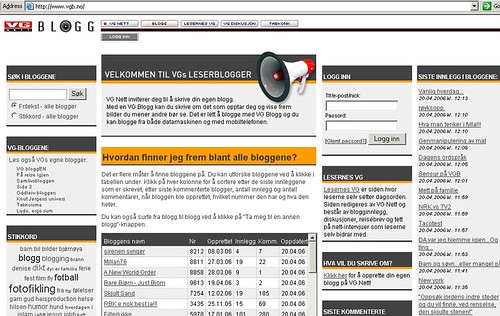
Aftonbladet copies VG’s blog success

Swedish tabloid Aftonbladet today launched a new blog hosting service for its readers, who are welcome to start their own blogs on Aftonbladet.se. The new blog service is a copy of Norwegian daily Verdens Gang and its successful service. Aftonbladet and VG are both part of the Schibsted group. VG are close to hosting 10,000 blogs and they have together published in excess of 50,000 posts so far.

Aftonbladet’s blogs allow trackbacks, a feature that competitor Expressen does not have. Both services are equipped with an “abuse” feature where readers can protest against inappropriate content, which in itself is an irony, in that newspapers normally are proponents of free speech. Aftonbladet also allows anyone to comment on the blogs while Expressen demands that you are a member. Aftonbladet also has a feature with tags that allows you to surf blogs by topic.

All in all, my verdict is: Aftonbladet-Expressen 1-0.

aftonbladet blog

vg blog

Oil price still a myth

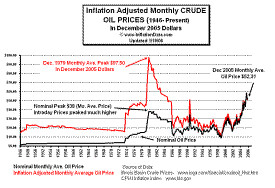
Today’s headlines are all about the new record levels for the oil price. But is it a record? No, not in inflation adjusted terms, see chart below (full size chart here). Oil prices were much higher in December 1979.

Inflationdata.com writes:

“The real peak occurred back in 1980. Back then the monthly average price peaked at $38 per barrel (although the intraday prices spiked much higher).

The common price quoted is for the all time high of Oil prices is the price that the highest barrel ever sold for. That price doesn’t really have any effect on the price consumers paid. What really matters is the average price the refineries had to pay for the whole month.”
– There is no reason to assume there will be a decrease [in the oil price], Ulf Svahn, Managing Director of Svenska Petroleuminstitutet, told Dagens Industri this morning.

Sure, that’s what you would expect a spokesperson from the oil industry to say, wouldn’t you?

Footnote: I have written about this before.

Who’s calling who a fatty?

Not only the Swedish tabloids are fascinated by the story of “Gizmondo-Stefan” Eriksson and how he crashed his Ferrari Enzo. The story is top news on the Washington Post’s web edition this morning (free reg. required) and many tv networks are reporting on the case.

“The press has really blown this out of proportion,” his lawyer said.

Sure, but it is primarily Aftonbladet that persist in calling Eriksson “Tjock-Steffe” (Fat Steve), a name he probably hasn’t been called in 20 years. Aftonbladet has called him Tjock-Steffe 24 times since September, compared to Dagens Industri (7), Expressen (4) and Computer Sweden (4). Quite interesting, considering the recent debate in Aftonbladet and other papers over hockey player Per Ledin who called goalie Tommy Salo “a fatty”. Apparently it’s ok to call some people fat…