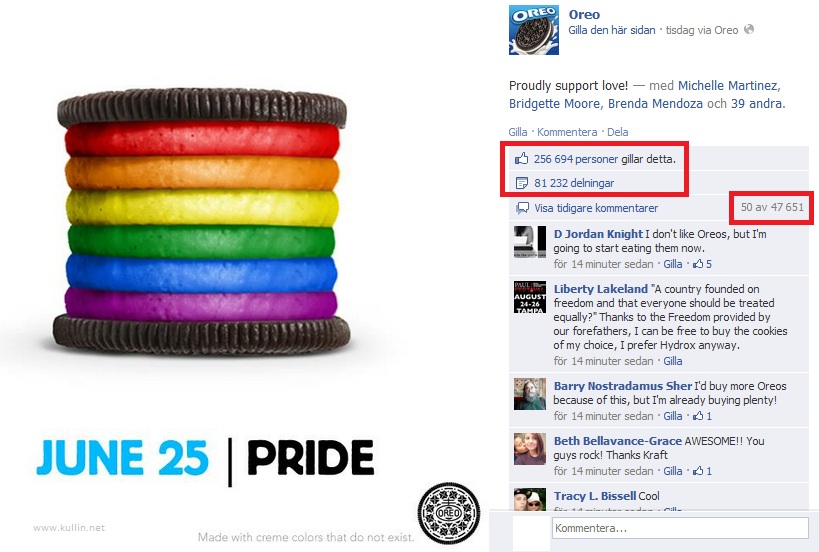
Oreo Pride cookie receives 250,000 likes on Facebook

In celebration of LGBT Pride Month, Nabisco owned cookie brand Oreo posted an image of a rainbow coloured cookie on its Facebook page earlier this week, with the caption “Proudly support love!”. An incredibly simple, but yet smart move to generate a lot of buzz. The image has currently generated 256,000 likes, 47,000 comments and 81,000 shares. The image was also tweeted and has been retweeted 3,100 times at the moment.

Oreo Pride cookie

Of course, this is a calculated move by Oreo and they are certainly aware that the image will stir up some controversy. Some media reports are talking about boycotts against Oreo, but that news angle seems grossly exaggerated. In fact, most comments seem to be supportive, so digging up a few negative comments just seems sensationalist on the part of the traditional media.

A few boycott pages have been launched on Facebook but they have about 20-30 likes, so in comparison with the quarter of a million likes and more than 80,000 shares, it is nothing.

It is a bold move and by the looks of it, Oreo is getting deserved praise for it.

How much sales does Pinterest really generate?

Do you want the recipe for the ultimate viral piece of social media content? Take one part statistics (of questionable accuracy). Add the most hyped social sites like Pinterest, Facebook and Twitter. Put the information in an infographic which you can then pin on Pinterest, blog, tweet etc. I am sure you will see a huge number of likes, retweets, repins by people who think your content is absolutely brilliant, or rather, people who are too lazy to examine the accuracy of the content. Because that is how most of us behave online these days, me included. We read something about a topic we find interesting and we share it instantly without reflecting much on whether the information is likely to be true or not.

When blogs began to appear we got all excited over the prospect that there were now an army of watchdogs out there, just waiting to bite into any piece of twisted fact, inaccuracy or lie. Transparency would rule and the world would become a great place again. Instead, the pace of social media has turned most of us into an army of watchers, often only passively looking at what others produce, only capable of amplifying a message, or worse, distorting it along the way so that what was initially a factual piece of information, becomes something erroneous. Much like a game of Chinese whispers.

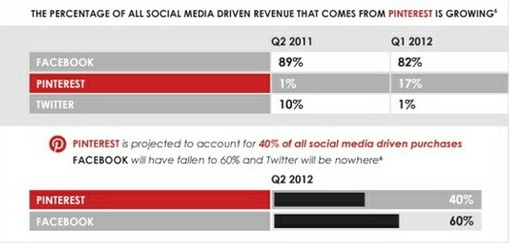
For example, do you think it is possible that Pinterest will drive 40% of all social media sales in Q2 2012? I think that sounds unlikely, but that is what this infographic is stating.

pinterest drive 40 percent of social media sales infographic

The infographic has been published by Tamba in the UK and is a few months old, but is still being passed around online, for example a post was published yesterday on Ragan.com also claiming that Pinterest is “to drive 40 percent of all social media purchases”.

To start with, what does that mean? All sales on the entire planet, or are we talking about the US? After a bit of digging I eventually found the source of this piece of data. In April, Venturebeat published an article by the CEO of Convertro, that projected Pinterest to increase its share of social media sales from 17% to 40%. But this is not for all businesses online, this data is based on “measurements we made across 40 of our client sites — most of which are top 500 internet retailers”.

So, data from an undisclosed set of 40 retailers are supposed to represent every company on the planet that sells stuff online? That is just ridiculous. You cannot make any statistical conclusions from that type of data collection other than that you will know what sites that drive sales for these 40 retailers. Typically, these kind of details are often missing when someone else uses them to make an infographic and suddenly the Chinese whisper game is on.

Besides, as I blogged some days ago, there are some signs that traffic to Pinterest has levelled out. Since there are no official statistics from Pinterest that show us if the site continues to increase, we can only guess. But if you ask me, I would not state that Pinterest drives a certain percentage of all the traffic to e-commerce sites, because we simply don’t know.

The problem with Twitter handles of sports stars

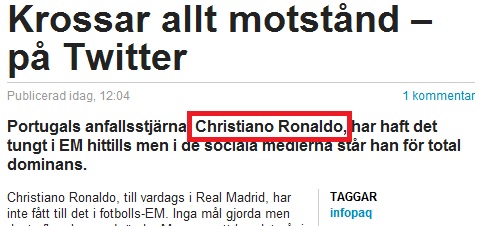
I just read an article (in Swedish) today about the top EURO 2012 football players in social media. It reveals that Portugal’s Cristiano Ronaldo is the footballer with most followers on Twitter and Facebook, in total 56 million followers (10.3 on Twitter and 45.9 on Facebook). Add to that the he also has 6.6 million followers on the Chinese equivalent to Twitter, Tencent Weibo.

The article doesn’t link to the official accounts of the sports stars, which is why I decided to write this blog post. You see, the correct accounts are sometimes very hard to find, especially on Twitter and certainly when media like Dagens Media misspell their names.
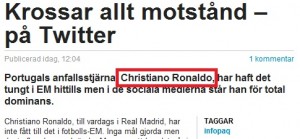
cristiano ronaldo

I see three main reasons for this.

The first is that many celebrities have had their real names “brandjacked” by people pretending to be them, forcing them to make up Twitter handles that are, well, “creative”. For example, Manchester United defender (not in the EURO 2012 for controversial reasons) Rio Ferdinand’s Twitter handle is @rioferdy5 instead of the anticipated @rioferdinand (which is not active). Ferdinand would have no trouble taking over the handle with his real name if he wanted to. I have done that myself for several well known brands.

The second reason it is hard to find the official accounts is that neither Twitter nor Facebook have especially good search engines of their own. Sometimes you may get the best result, but not always. A third reason is that Twitter is not doing much to remove fake accounts that pose as official. A search on Twitter for “Rio Ferdinand” displays a number of fake “official” accounts. The one with the handle “RIOFERDY5” is actually not the same as “rioferdy5” since the “I” is in fact the letter “L”.
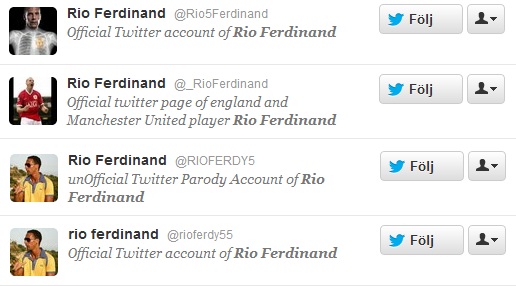
rio ferdinand twitter

The inability to be sure that an account is an official account causes a lot of unnecessary confusion, especially for the celebrities when media sometimes quote fake tweets. Italian Serie A club AC Milan tweeted that a fake account was in fact the official one by Zlatan Ibrahimovic, one of its star players. There is still a lot of confusion around if he even has an account, a PR agency once confirmed that they run one account on behalf of him or his team, but Ibrahimovic himself seems oblivious to the fact that he is on Twitter.

Ferdinand’s team mate Wayne Rooney used to be know as @Wazzaroon08 on Twitter, but is now @WayneRooney.

Another uncertain account is that of Leo Messi, the world’s top footballer. Certainly a player like him, who has 36 million Facebook fans, would have more than some 90,000 followers on Twitter? But his own club, FC Barcelona, is following one account (@messi_barcelona) that should be the official one, one would assume. It has only 93,000 followers and if you click on the link in the bio, you get a warning message from bit.ly, saying this link is potentially not safe to click (I haven’t clicked, so I don’t know if it is safe). The account has only tweets automatically published via Twitterfeed, so by the looks of it, this is not the real deal.

bitly warning

Then again, is the @FCB account really an official account for the club? Seems so, because @andresiniesta8 is following it.

This confusion is not good for anyone, so Twitter should take more responsibility for removing fake accounts and maybe we as users can be more active in reporting them. Then again, the option we have is to report accounts for spamming, and that’s not really what this is about, so they label on that button may deter many from reporting these accounts. Celebrities and brands on the other hand, should be more active in trying to get their accounts labelled “verified”, which I still see as the best proof that an account belongs to an official source.
Olympic social media failures: part 1

For the London 2012 Olympics, the IOC has taken some steps to enable fans and athletes to use social media to enhance the experience. This is clearly a positive development compared to previous games. During the 2004 and 2006 Olympic Games for example, blogging was banned. Now, “the IOC Social Media, Blogging and Internet Guidelines for participants and other accredited persons” even encourages the use of social media, albeit under some heavy restrictions. [pdf]

“The IOC actively encourages and supports athletes and other accredited persons at the Olympic Games to take part in ‘social media’ and to post, blog and tweet their experiences.”

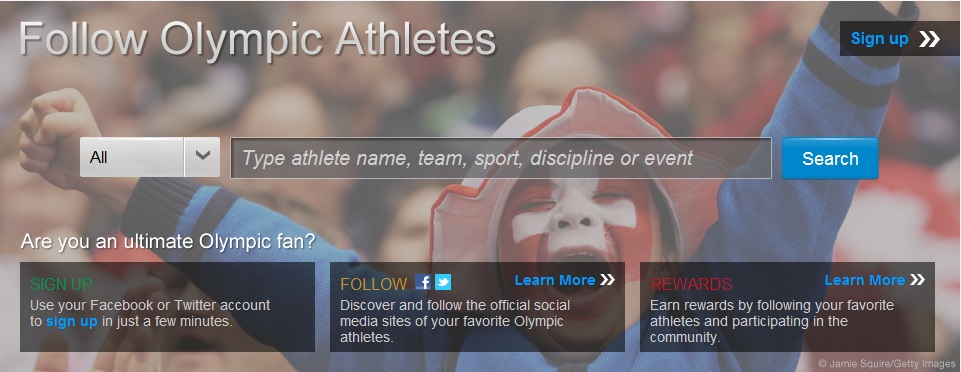
The IOC has also creaded the Olympic Athletes Hub which collects the official Facebook and Twitter accounts of participating athletes (although the list is not that extensive, the Swedes listed in the Hub are mostly Winter Olympics participants).

London 2012 Olympics social media Hub

So while we will probably see some creative uses of social media during the games, we will most certainly also see some failures. All the guidelines in the world won’t stop people from posting content that others might find inappropriate. The first example comes from the two Australian swimmers Nick D’Arcy and Kenrick Monk. Only two months before the start of the London 2012 Olympics, they posted a picture on Facebook in which they posed with shot guns and a pistol. Many found this image offending and it forced Swimming Australia to issue a statement saying it became aware of “inappropriate photos” and “instantly contacted the athletes involved to ask for them to be removed.”

Nick Green, the chef de mission for the Australian Olympic team, said:

“These postings today are foolish and clearly inappropriate for members of the 2012 Australian Olympic Team.”

Now the swimmers have removed the picture from Facebook and apologized. I am sure we will see similar examples of both athletes and other participants who get in trouble for activities in social media. Hopefully though, this will not discourage people from using social media. It’s a strong positive force, you just need to use some common sense and also realize that nothing you post is private.

Has traffic to Pinterest plateaued?

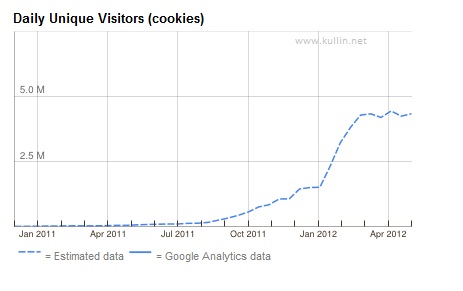
There has been an incredible hype over Pinterest during the last six months or so, to the extent that many claim it is a must for business marketers. While I have no problem in seeing benefits with the site, a word of caution might be in place. The site grew extremely fast for some time, but will this growth continue or will users leave the network once they tried it a few times?

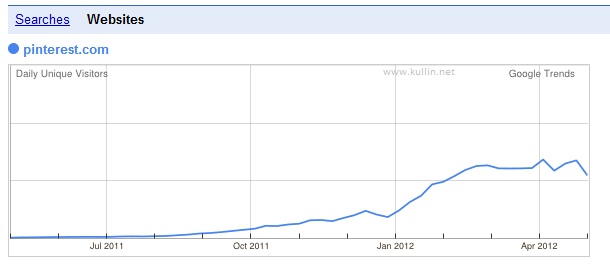
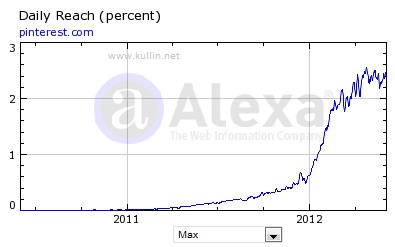
I don’t know, but take a look at the three graphs below. Although there is reason to be careful with reading too much into this statistics, it sure does look like traffic to Pinterest has stopped growing as fast as it did in early 2012, or even stopped growing at all. What do you think, are you using Pinterest as much as you did six months ago?

DoubleClick Ad Planner:

pinterest traffic graph adplanner

Google Trends:

pinterest traffic graph google trends

Alexa.com

pinterest traffic graph alexa