Journalist blogs trump traditional articles in Google

You might think that journalist blogs are just a side-kick to their regular paper or online columns, but Google disagrees. These 13 Swedish journalists might soon be better known for their blogs than for their traditional journalistic achievements. In 11 out of 13 cases, a Google search for their names delivers their blogs as number one.

Andreas Ekström – #1
Lotta Gröning – #1
Cecilia Hagen – #1
Håkan Jacobson – #1
Linna Johansson – #3 (this blog has been up just one week, with the exception of one initial post a month ago)
Helle Klein – #1
Olof Lundh – #1
PM Nilsson – #1
Anders Nunstedt – #1
Linda Skugge – #2 (#1 is her personal webpage)
Per Svensson – #1
Ebba von Sydow – #1
Fredrik Virtanen – #1

It is a remarkable development since most of these journalists have been writing for years, but blogging only for a couple of months, or even weeks, but already blogs play the first violin in their digital repertoire. Now, a few questions arise. First, are the texts they publish on their blogs the kind of journalistic product they want to have as their primary association? Some who question the quality of these blogs would say ‘no’, although there are blogs on that list that I read with great interest. Second, is there a way to exploit this phenomenon? Of course there is, and opportunities may even be greater for the journalists than for the media.

A well written blog may even lead to a situation where “some newspaper reporters [will become] better known in some circles for their blogs than for their printed work” to quote Tim Porter. He makes a comparison between the music industry and the media industry. He claims there is a shift from ‘the music business’ to the ‘musician business’ in that consumers gladly pay 100 bucks for a concert ticket but are reluctant to pay 19 bucks for a CD. He quotes the New Yorker: “In the musician business, the assets that once made the major labels so important – promotion, distribution, shelf space – matter less than the assets that belong to the artists, such as their ability to perform live. The value of songs falls, and the value of seeing an artist sing them rises, because the experience can’t really be reproduced.”

What if the journalism business is developing into a journalist business, if journalism produces a commodity we don’t want to pay for but original writing is worth much more? He continues:

“If news is commodity, then in-depth reporting has value. If routine government coverage offers nothing but stenography, then interpretive reporting has value. If the conventions of traditional journalism produce bland and boring copy, then personality and point of view have value. If newspapers have become disconnected from community, then relationships between writer and reader have value.”

Blogs are by nature an excellent channel for building relationships, being personal and interpreting news and events. By exploiting their talents journalists can become thought leaders in their own right. So a question goes out to journalist bloggers – will you seize the opportunity to extend your brand beyond the medium who currently hires you, or are you satisfied with being the journalist who writes about taking the bike to work?
Newspapers are betting on participatory journalism

The New York Times published an interesting article (free registration required) yesterday about the News & Record and its new experiment with participatory journalism.

“This feature, part of a planned overhaul of The News & Record’s Web site that is to begin next week, is a potent symbol of a transformation taking place across the country, where top-down, voice-of-God journalism is being challenged by what is called participatory journalism, or civic or citizen journalism.”

Several similar projects are mentioned in the article and I especially reacted to the underlying reasons for taking such initiatives.

“Nearly all newspapers have been troubled by a range of substantially similar worries: the loss of 18-to-34-year-old readers; the loss of trust in conventional news media; and the emergence of technology, especially blogs, that make it easy for ordinary people to barge into the old media’s one-way conversation.”

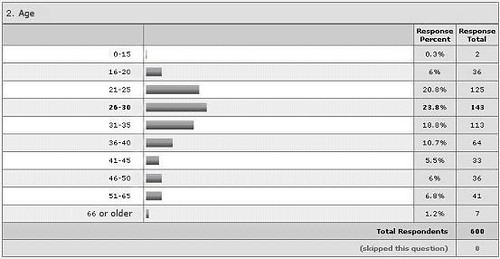
In my recent survey (pdf) of 600 Swedish bloggers and blog readers I found that 69.4% of all blog readers are between 16 and 35, so the approach to engage in citizen journalism seems logical. It should be an initiative that the target group is interested in.

Moral shock at Stockholm Spectator

Stockholm Spectator’s Michael Moynihan today lashes out at artist Kanye West for having the nerve to both criticize world leaders and living a luxury life sipping Kristal at the same time.

Moynihan writes that during Live 8 “it was left to mumbling rapper Kayne West [sic!] to vent outrage at “the politicians” who “drive around in their Bentleys while Africa starves.” Then Moynihan is “shocked” when he reads an article where West complains at not being quite as rich and famous as he would want to be.

Moynihan’s reaction might have been well founded if it hadn’t been for the fact that West, while certainly living la dolce vita, also reaches out to the less fortunate. He is very active in the black community especially where the youth are concerned, by for example founding the Kanye West Foundation which is “dedicated to combating the dropout problem in the nation’s schools with compelling music programs. “Loop Dreams, the first initiative of the Kanye West Foundation, is designed to support the fight to keep instruments in the schools, and to provide opportunities for “at-risk”; students to learn how to write and produce music while simultaneously improving their academic skills.”

Maybe it’s just a small thing, maybe even too small if your net worth is in triple digits of millions of dollars, but in my book that does give West the right to criticize others who do less. And while this initiative doesn’t help the starving millions in Africa (but his appearance at Live 8 might), I bet there are other artists at Live 8 who do even less. But of course, it is difficult to fact check if you can’t spell the name of the person you are blasting. This piece of information is on the front page of www.kanyewest.com.

Swedish television forbids journalist to blog – again

Journalist Per Gudmundson must have some sort of record for most gagged blogger. His first blog was abandoned because his employer SVT did not find it appropriate for one of its journalists to express political views in a blog on his spare time. Now Zaida Catalán informs us that his second blog, that I reported about yesterday, has been stopped too. He was supposed to have an offical blog at SVT 24 to report from the political event in Almedalen. But according to Catalán, the new blog was vetoed last minute by SVT’s Director of Programming Leif Jacobsson. In retrospect, it was interesting that the only person who came up to me to talk after my (and Gudmundson’s) blog presentation to the management of SVT was Jacobsson. He told me an Oscar Wilde (I think) quote that went something like “Say it with wine, say it with pearls, but never say it in words” meaning that once you publish something in writing it will always stick with you. In the light of that quote his veto might not be a big surprise. I’m sure this is not the end of this story.